Thinking about trading city convenience for a smaller-town pace without cutting yourself off from Lincoln? That is the big question many buyers ask when they look at Seward after living in Lincoln or Omaha. If you are considering the move, it helps to know what will actually change day to day, from housing choices and commute times to costs and local amenities. Let’s dive in.
Seward Feels Smaller, Not Remote
Seward is a much smaller community than either Lincoln or Omaha. Census QuickFacts lists Seward at 7,752 residents in 2024, compared with 300,619 in Lincoln and 489,265 in Omaha. The city also covers just 4.46 square miles, so your daily routines may feel more compact and easier to navigate.
That said, Seward is not best described as isolated. County materials place Seward County within the Lincoln metro area, which makes the move feel more like a shift toward a smaller town with regional access. If you still want to stay connected to Lincoln for work, errands, or entertainment, that connection remains part of the picture.
Housing in Seward Looks Different
If you are moving from Lincoln or Omaha, one of the first changes you may notice is the housing mix. Seward’s comprehensive plan says the city’s housing stock is roughly a 60/40 split between owner-occupied and renter-occupied homes. It also notes that most of the housing stock is owner-occupied single-family detached housing.
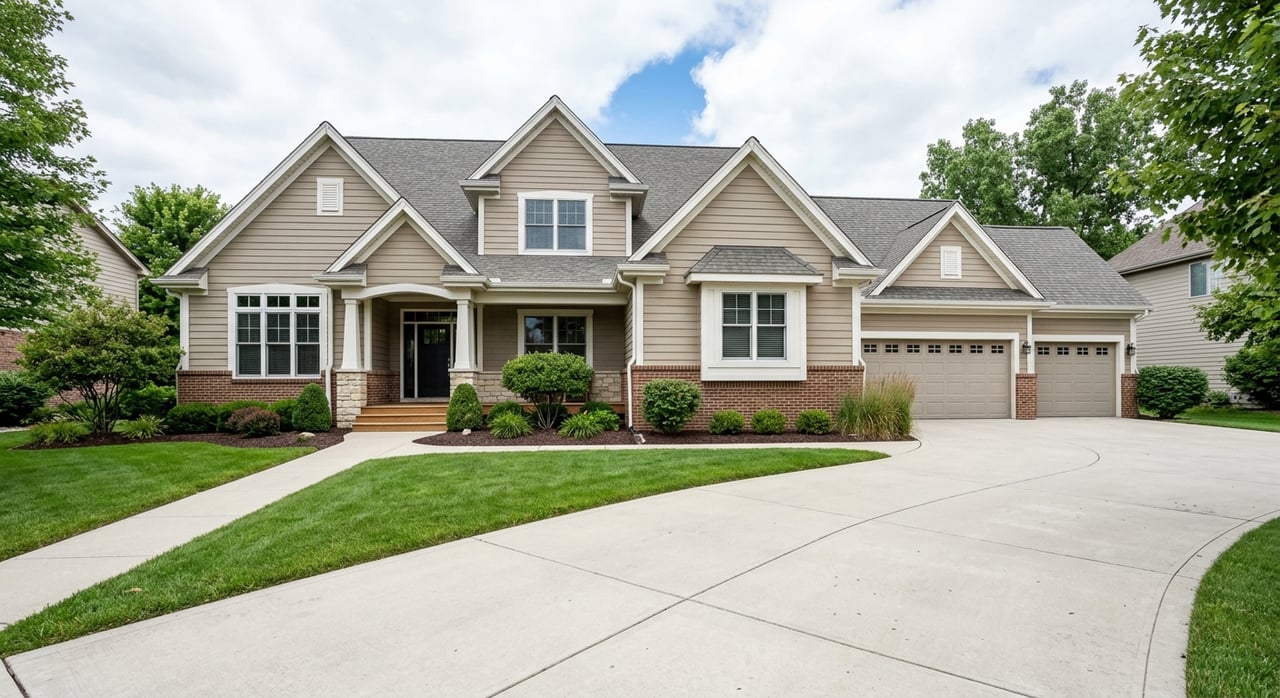
In practical terms, Seward tends to feel more house-and-yard oriented. You are likely to see fewer apartment and condo choices than you would in Lincoln or Omaha. For buyers who want more of a traditional residential setting, that can be a major draw.
Expect More Single-Family Homes
The city’s plan also points to limited housing diversity and a shortage of lifecycle housing. That means your options may lean more heavily toward detached homes rather than a wide range of condos, townhomes, or multi-unit living arrangements. If you are used to having lots of housing formats to choose from, Seward may feel more selective.
Newer construction since 2004 has also favored owner-occupied dwellings. That pattern supports a more settled, suburban-style feel, especially in areas where garages and driveways handle most parking. Compared with many parts of Lincoln or Omaha, the overall layout may feel less dense and more spread out.
Neighborhood Patterns May Feel Familiar
Seward’s comprehensive plan describes traditional neighborhoods near the courthouse square as well as low-density residential areas with a mix of housing types. It also includes illustrative lot widths of 75 feet for detached homes, 50 feet for attached or townhouse forms, and 40 feet for higher-density forms. For you as a buyer, that often translates to homes with more visible yard space and off-street parking as the norm.
If your goal is to find a place that feels quieter and more residential, Seward may line up well with that preference. If you want a broad menu of apartment or condo living, you may need to plan for fewer options.
Cost of Ownership Is Mixed, but Often Lighter
A move to Seward is not simply about finding the lowest purchase price. The numbers suggest a more balanced story. Census QuickFacts shows the median value of owner-occupied homes in Seward at $244,600, compared with $264,000 in Lincoln and $245,500 in Omaha.
So while Seward’s median home value is below Lincoln’s, it is very close to Omaha’s. That matters because some buyers assume a smaller town always means dramatically lower home prices. In Seward, the bigger advantage often shows up in monthly ownership costs rather than headline price alone.
Monthly Housing Costs Are Lower
Median monthly owner costs with a mortgage are $1,670 in Seward. That compares with $1,697 in Lincoln and $1,783 in Omaha. Based on those figures, Seward comes in about $27 lower per month than Lincoln and about $113 lower than Omaha.
Renters may also see some savings. Median gross rent is $1,018 in Seward, compared with $1,086 in Lincoln and $1,187 in Omaha. That puts Seward about $68 lower than Lincoln and about $169 lower than Omaha.
Property Taxes Strengthen the Value Story
One of the clearest differences is property tax rate. Seward County’s 2024 average property tax rate was 1.2175%, compared with 1.7012% in Lancaster County and 2.0462% in Douglas County. For many buyers, that can make the long-term carrying cost of ownership feel more manageable.
This is why Seward is often better framed as a place with a lighter cost profile, especially on taxes, rather than a place with dramatically lower home prices. If you are budgeting for the full cost of ownership, not just the purchase price, that distinction matters.
Commuting Works Best With Lincoln
If your work, family, or routine still centers on Lincoln, Seward can be a realistic option. TravelMath places Seward about 30 driving miles from Lincoln, with an estimated drive of roughly 35 minutes. That makes Lincoln commuting possible for many households.
Omaha is a different story. TravelMath places Seward about 76 miles from Omaha, with an estimated drive of about 1 hour 13 minutes. That longer distance can make a daily Omaha commute harder to sustain for many people.
Regional Access Still Matters
Seward County is intersected by Interstate 80, Highway 34, and Highway 15. Those corridors help support access within the region and are part of why Seward stays connected rather than cut off. For buyers moving from Lincoln, this can make the transition feel easier than they expect.
If you are moving from Omaha, it helps to think carefully about how often you truly need to be back in the city. Occasional trips are one thing. Building your everyday schedule around that drive is another.
Public Transit Is Limited and Scheduled
Seward County does operate a public transit system, but it is not set up like an urban walk-up network. According to the county fare sheet and rider manual, rides are curb-to-curb and generally must be scheduled at least 24 hours in advance. Lincoln trips cost $16 or $20 per boarding, while Omaha trips cost $60.
That setup can be helpful in specific situations, but it is not a substitute for city-style transit. In day-to-day life, most households should expect driving to remain the main transportation mode.
Daily Life in Seward Can Feel Self-Contained
One of Seward’s biggest strengths is that it offers enough local infrastructure to support everyday living without feeling oversized. The city lists 11 parks along with a pool, disc golf, golf, walking trails, a dog park, a campground, tennis and pickleball courts, and a fishing pond. That gives you a variety of ways to spend time close to home.
Seward Memorial Library adds useful community amenities like meeting spaces and a drive-up window. These may sound like small details, but they often shape how convenient daily life feels once you settle in.
Schools, Health Care, and Campus Presence
Seward Public Schools says it serves students in PK-4, 5-8, and 9-12 buildings and offers AP and dual-credit options. Concordia University, Nebraska is also located in Seward, adding a college-town element to the community. Together, those institutions contribute to the city’s local activity and services.
For health care, Memorial Health Care Systems describes Memorial Hospital as a critical access facility in Seward. The system also includes a family medical center and visiting specialists. For many buyers, having these services in town adds confidence that Seward can support everyday needs.
Shopping and Community Traditions
County tourism materials list grocery, hardware, dining, theater, and bowling options in Seward. That helps explain why the town can feel self-contained even while staying tied to Lincoln. You may not find the same scale of options as a larger city, but you can cover a lot of your routine close to home.
The county also highlights Seward’s large July 4 celebration and other community traditions. For many people, those recurring local events are part of what makes a move to a smaller town feel meaningful, not just practical.
Who Seward Often Fits Best
Seward may be a strong fit if you want a quieter pace, more single-family housing, and easier-to-manage ownership costs while keeping Lincoln within reach. It can also appeal if you value a community that feels complete on a daily basis, with parks, schools, health care, and basic services nearby.
For Omaha-based buyers, the decision often comes down to how much city access you want to preserve. For Lincoln-based buyers, Seward may feel like a more natural step if you are ready for a smaller setting but do not want to disconnect from the metro.
How to Plan Your Move Smartly
If you are seriously comparing Seward with Lincoln or Omaha, it helps to look past listing photos and focus on how the move will affect your routine. A smart comparison usually includes:
- Your realistic commute time each week
- The housing types you actually want
- Your full monthly ownership costs, not just price
- Access to the services you use most often
- How much local convenience matters to your lifestyle
This is also where local guidance matters. In a market like Seward, understanding housing type, lot layout, resale potential, and cost of ownership can help you make a more confident choice.
If you are exploring a move to Seward from Lincoln or Omaha, The Home Team can help you compare options, understand the numbers, and move forward with clear local insight.
FAQs
What is the biggest difference between living in Seward and Lincoln?
- Seward is much smaller, more house-oriented, and more owner-occupied, while still maintaining practical access to Lincoln.
Is Seward cheaper than Omaha for homebuyers?
- Median home values are very close, but Seward has lower median monthly owner costs and a lower average property tax rate than Douglas County.
Can you commute from Seward to Lincoln every day?
- Yes, Seward is about 30 miles and roughly 35 minutes from Lincoln by car, which makes a daily commute realistic for many people.
Can you commute from Seward to Omaha every day?
- You can, but the drive is much longer at about 76 miles and around 1 hour 13 minutes, so it is typically better suited for occasional trips than a routine commute.
What kind of housing is most common in Seward?
- Owner-occupied single-family detached homes are the most common housing type in Seward.
Does Seward have enough local amenities for daily life?
- Yes, Seward offers parks, recreation, library services, schools, health care, grocery options, dining, and other everyday amenities that help the community feel self-contained.