Wondering where you fit in Omaha? That is a smart question to ask before you start browsing homes, because this city offers a real mix of urban energy, classic neighborhood character, and more suburban-style space. If you are trying to decide between downtown convenience, an in-between area with personality, or a farther-west neighborhood with a newer feel, this guide will help you understand the differences and what each lifestyle can offer. Let’s dive in.
How Omaha’s layout shapes daily life
Omaha grew west from the Missouri River, and that pattern still shows up in how the city feels today. You can see the shift from the dense urban core to older streetcar-era neighborhoods and then to later-growth suburban areas farther west.
That matters when you are deciding where to live. In simple terms, the farther you move from the core, the more likely you are to find detached homes, larger yards, and a more car-oriented routine. In the center of the city, you are more likely to trade space for access, walkability, and attached or multi-unit housing options.
The citywide housing mix supports that big-picture view. In the 2023 ACS, Omaha had 361,670 housing units, and 58.3% were 1-unit detached homes, which shows that single-family housing still plays a major role across the city.
Urban Omaha options
If you want the most urban lifestyle in Omaha, downtown, the Old Market, north downtown, and The RiverFront are the clearest fit. Official sources describe downtown as a dense urban area, and The RiverFront connects key parts of the heart of the city.
This part of Omaha is best for buyers or renters who want to be close to activity, events, and a more mixed-use environment. You may have less private outdoor space, but you gain easier access to parks, restaurants, workplaces, and transit.
What downtown living feels like
Downtown Omaha offers the city’s most concentrated urban setting. The Old Market Historic District adds a strong sense of place, while nearby commercial centers and civic spaces keep the area active throughout the day.
The RiverFront adds another layer to that experience. Gene Leahy Mall is described as the most urban of the three RiverFront parks, with lawn space, a performance pavilion, a sculpture garden, a playground, and a dog park.
Transit and connectivity in the core
Transit access is strongest in and around downtown. ORBT runs an eight-mile route along Dodge and Douglas from downtown to Westroads Mall, and it includes real-time arrival updates, Wi-Fi, and advance fare payment.
Metro also operates a weekday Downtown Circulator and serves the larger metro with more than 2,100 bus stops. The RiverFront is described as a short walk from Metro bus service, parking garages, hotels, and ride-share drop-off areas, which supports a more connected day-to-day experience.
Who may prefer the urban core
The urban core can make sense if you want convenience and access more than lot size. You may like this part of Omaha if your priority is being near parks, entertainment, major employers, and transit corridors.
It can also be a strong option if you prefer lower-maintenance living. In a dense urban area, attached and multi-unit housing tends to be more common than in other parts of the city.
In-between Omaha neighborhoods
Not everyone wants a downtown lifestyle, and not everyone wants the newest subdivision either. That is where Omaha’s in-between neighborhoods stand out.
These areas often trace back to the city’s streetcar-era growth and early suburban expansion. Neighborhoods like Dundee, Field Club, Gold Coast, Minne Lusa, and Indian Hills show how Omaha developed over time, and they often offer a middle ground between the core and the outer edge.
What makes these areas different
These neighborhoods are often more mixed and character-driven than farther-west subdivisions. You may find older single-family homes, some multi-family buildings, and more commercial-residential edges than you would in a newer suburban setting.
That mix can create a lifestyle that feels connected without being fully urban. For many buyers, that means a little more space than downtown, a little more variety in housing types, and a little more history in the streetscape.
Why lot sizes vary so much
One reason Omaha can feel so different from block to block is zoning. The city’s residential zoning districts range from 20,000-square-foot minimum lots in large-lot districts to 4,000 to 5,000 square-foot minimums in denser residential districts, with R7 and R8 allowing 1,200 to 7,000 square feet depending on the district.
Those numbers are zoning minimums, not neighborhood averages. Still, they are useful because they help explain why some parts of Omaha feel compact and others feel more spacious, even when they are only a short drive apart.
Who may prefer the in-between areas
These neighborhoods can work well if you want a balance of access and space. You may be drawn to them if you like established housing, varied streetscapes, and the idea of living in an area that sits between the urban core and the far-west edge.
They can also appeal if you are open to different home styles and want flexibility. From older detached homes to some multi-family options, these areas often offer more variety than a single-style subdivision.
Suburban and edge-suburban Omaha
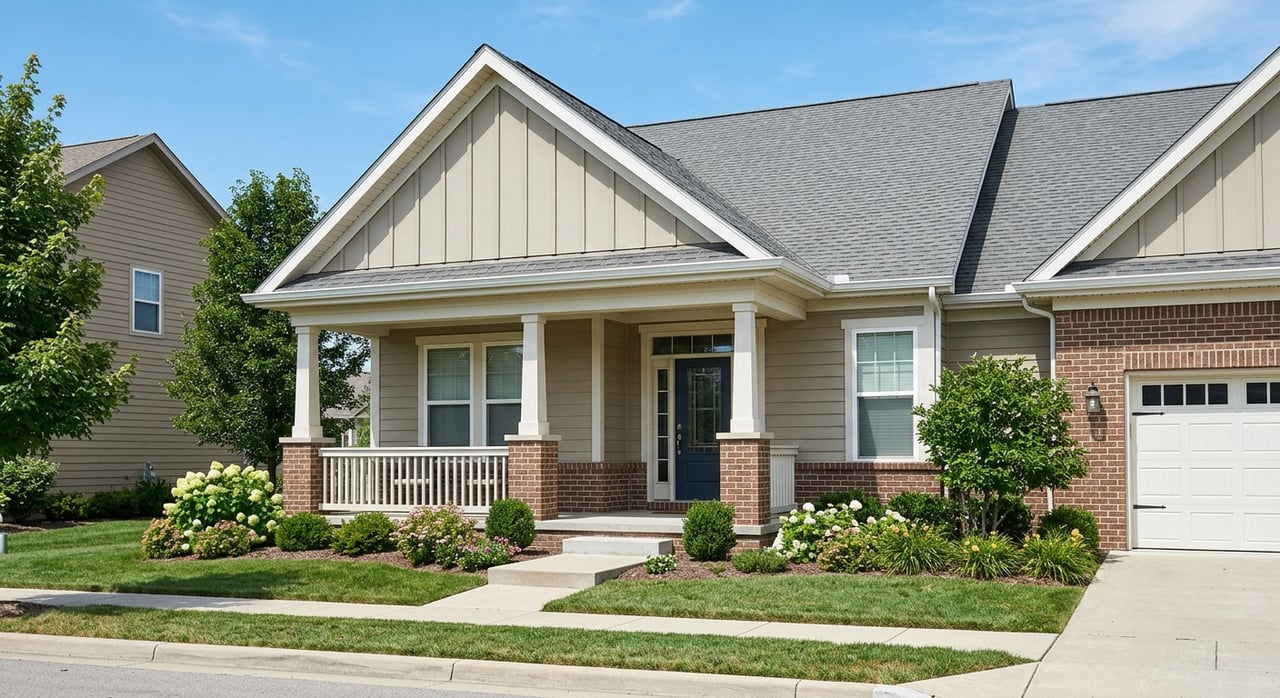
Farther west and in later-growth parts of Omaha, the city tends to feel more suburban. This is where detached homes, newer subdivisions, and larger yards are generally more common.
That pattern matches Omaha’s growth history and housing structure. As the city expanded west, later development often leaned toward lower-density residential patterns shaped by automobile access and subdivision design.
What a suburban lifestyle often means
In practical terms, suburban and edge-suburban Omaha often means more private space and a more car-oriented daily routine. You may have a larger yard, a newer home, or a neighborhood layout that feels more removed from the city center.
For some buyers, that tradeoff is exactly the goal. If you value square footage, newer subdivision patterns, and a quieter residential feel, west and outer Omaha may be the most natural fit.
Transit and driving expectations
Transit is still available in these areas, but the structure is more corridor-based than in the urban core. Metro’s fixed routes include corridors such as 108th/Fort, Q Street, 90th Street, and Millard Express, while the system overall serves more than 100 square miles across the Omaha metro.
That usually means suburban Omaha feels more car-dependent, even when bus service exists along major arterials. Your daily routine may be easier if you expect to drive for work, errands, and activities.
Street design and traffic calming
The city also manages traffic at the neighborhood level in residential areas. Omaha’s traffic-calming program applies to residential streets, and local residential streets are signed for 25 mph.
Eligible streets can receive features such as speed humps, speed tables, raised crosswalks, or traffic circles. While that does not define every neighborhood experience, it does show the city’s focus on residential street management in areas where people live.
How to choose the right fit
The best part of living in Omaha is that you do not have to force your lifestyle into one mold. The city offers clear choices, and each one comes with tradeoffs that may be right for you depending on your priorities.
A simple way to decide is to rank what matters most in your everyday life. Think about how you want to spend your time, how much space you want, and how you feel about driving versus being closer to activity.
Choose urban if you want
- A dense, connected environment
- Stronger transit access
- Walkable access to downtown amenities and parks
- Less maintenance and less emphasis on private yard space
Choose in-between if you want
- A middle ground between access and space
- Older homes and more varied housing types
- Established neighborhoods with mixed residential patterns
- More block-by-block variety in lot size and feel
Choose suburban if you want
- More detached housing options
- Newer subdivisions and later-growth development
- Larger yards or more private outdoor space
- A lifestyle that is more centered around driving
Why local guidance matters in Omaha
Omaha is not a one-size-fits-all market. The city’s growth pattern, zoning differences, and neighborhood history all shape what you will actually experience once you move in.
That is why it helps to look beyond a listing photo or a map pin. When you understand how an area developed, how housing types vary, and what day-to-day access looks like, you can make a more confident decision.
If you are comparing Omaha neighborhoods and want practical guidance on home style, lot feel, renovation potential, or overall fit, working with advisors who understand both real estate and construction can help you ask better questions from the start.
If you are planning your next move and want clear, honest guidance, schedule a free consultation with The Home Team.
FAQs
What part of Omaha feels the most urban?
- Downtown, the Old Market, north downtown, and The RiverFront offer Omaha’s most concentrated urban environment, with strong connectivity, mixed-use surroundings, and the city’s best transit access.
What are Omaha’s in-between neighborhoods?
- In-between neighborhoods are usually older streetcar-era or inner-ring areas such as Dundee, Field Club, Gold Coast, Minne Lusa, and Indian Hills, where you often see a mix of housing types and varied lot patterns.
Where are larger lots most common in Omaha?
- Larger lots are generally more likely in lower-density residential districts and later-growth west or outer Omaha areas, where zoning minimums and subdivision patterns support a more spacious feel.
Is downtown Omaha better for transit access?
- Yes. Downtown has the strongest transit connectivity, including ORBT service, the Downtown Circulator, and broader access to Metro bus routes.
Should you compare Omaha neighborhoods by average lot size alone?
- Not usually. In Omaha, zoning minimums and historical development patterns are a more reliable way to compare how compact or spacious an area may feel than a single citywide lot-size average.