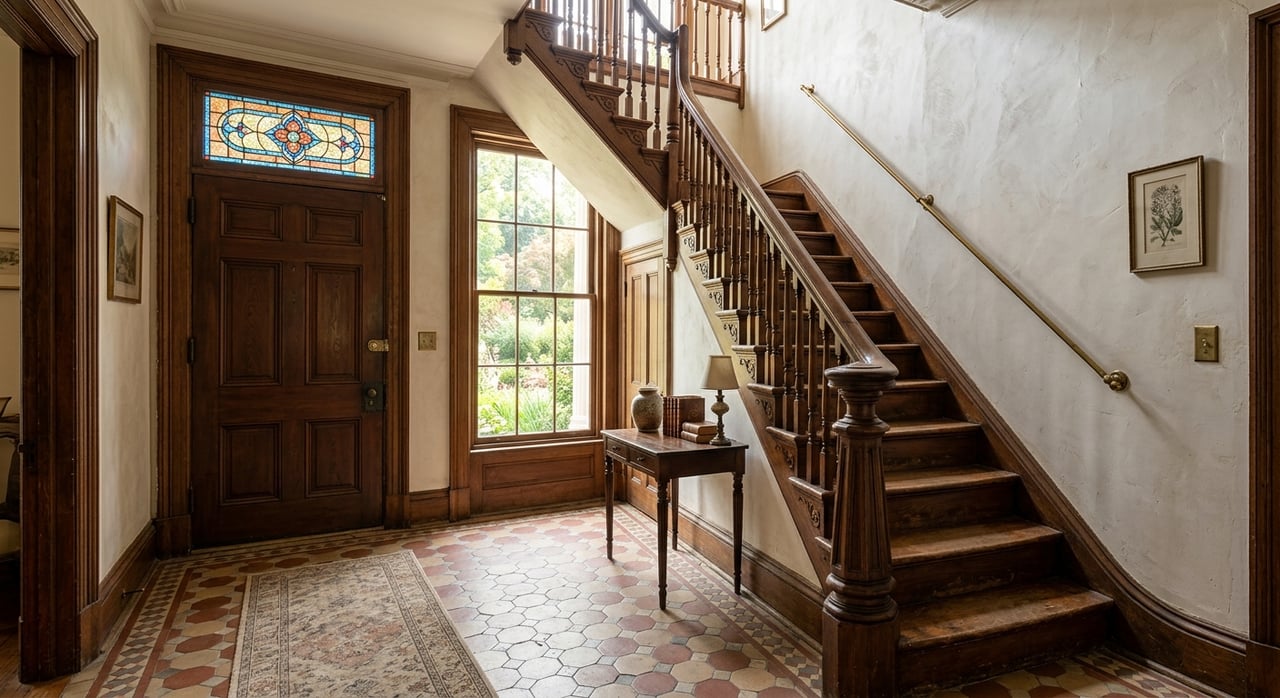
Thinking about buying a historic home in Nebraska City? You are not just shopping for square footage here. You are stepping into one of Nebraska’s most preservation-rich communities, where older homes carry real architectural character, long histories, and a different set of buying considerations than a newer property. If you want to understand what to look for, what to budget for, and how to plan smart before you make an offer, this guide will help you move forward with confidence. Let’s dive in.
Why Nebraska City Stands Out
Nebraska City has an unusually large concentration of historic housing. According to the city’s comprehensive plan, the Nebraska City Historic District spans 58 square blocks and includes homes influenced by Greek Revival, Gothic Revival, Italianate, Queen Anne, Shingle, and Georgian Revival styles.
That same plan also identifies the South Nebraska City Historic District and the South Thirteenth Street Historic District. In other words, older homes are not limited to a single pocket. You may find historic properties across several parts of the community, each with its own look, lot pattern, and maintenance story.
Nebraska City also has a strong preservation culture. The city highlights its long-standing effort to maintain historic places, and organizations like the Nebraska City Historical Society and the Nebraska City Museum Association’s Nelson House reflect how deeply local history is woven into the area.
Common Historic Home Types
If you are browsing older homes in Nebraska City, you will likely see a few broad eras show up again and again. Knowing the age range can help you ask better questions during showings and inspections.
Territorial and Mid-1800s Homes
These homes often have smaller footprints, simple layouts, and a longer history of repairs or alterations. The Nelson House, an 1857 brick home, offers a useful example of the city’s earliest housing stock.
With homes from this era, the story is rarely straightforward. You may see layers of updates, patched materials, or systems that have been improved in stages over many decades.
Late-1800s Brick Homes
This is a major part of Nebraska City’s historic inventory. The city’s plan notes that many district homes are two-story brick structures dating to the 1870s and 1880s, often with Italianate, Queen Anne, or Shingle-style details.
These homes can offer the architectural character many buyers want, but they also tend to require careful review of masonry, porches, windows, and drainage. A beautiful exterior does not always tell you how well the property has been maintained behind the scenes.
Early-1900s Historic Homes
Early-1900s homes are still historic, but they may feel a bit more familiar in layout and materials. The city plan includes Georgian Revival examples, showing that historic options extend beyond the Victorian-era styles many buyers first picture.
For some buyers, this era can feel like a sweet spot. You still get historic character, but sometimes with a floor plan or construction details that are easier to live with and update.
What to Inspect First
Buying an older home always calls for more diligence, but Nebraska City adds another layer because of Nebraska’s climate. State climate guidance points to severe storms, hail, tornadoes, flooding, and winter weather, which makes the exterior shell of the home especially important.
That means you should pay close attention to the roof, flashing, gutters, drainage, chimney, and exterior masonry during your inspection process. If water is getting in or not draining away properly, small issues can turn into expensive repairs over time.
Roof and Drainage
Start at the top. Look at the roof covering, flashing details, gutters, downspouts, and where water is directed once it leaves the house.
You also want to look at grading around the foundation. Basement moisture, standing water, and poor drainage near the house can be major warning signs in an older property.
Brick and Mortar
In Nebraska City, masonry deserves extra attention. The National Park Service notes that historic masonry performs best when moisture can move out properly, and repairs should use compatible mortar rather than hard or impermeable patching that traps water in the wall.
When you tour a home, watch for crumbling mortar joints, spalling brick, visible patch areas, and signs of past tuckpointing. If the wrong mortar was used in earlier repairs, it can create long-term problems for the brick itself. The National Park Service guidance on moisture and masonry is a useful reference for understanding why these details matter.
Chimneys, Porches, and Trim
Historic homes often have exterior features that are both visually important and expensive to repair. Chimneys, porch supports, steps, railings, and exterior wood trim should all be evaluated carefully.
These areas take a beating from weather. Deferred maintenance here can affect both safety and the home’s long-term preservation.
Windows and Sash Condition
Original windows are common in historic homes, and condition can vary widely. You should check for deteriorated sashes, storm window issues, draft points, peeling paint, and signs that repairs were delayed.
This is not just a comfort issue. Window work on historic properties can become more complex if you plan to make exterior changes later.
Lead Paint Risk
Lead paint is a serious issue in older housing. The EPA says homes built before 1978 are more likely to contain lead-based paint, and 87% of homes built before 1940 have some lead-based paint.
If you are buying a pre-1978 home, it is smart to assume lead may be present until testing or professional evaluation shows otherwise. The EPA’s lead paint guidance for older homes is a good starting point, especially if you are planning repairs or renovation work that could disturb painted surfaces.
Plan for Preservation-Friendly Updates
One of the biggest mistakes buyers make is assuming a historic home can be updated exactly like a newer property. In reality, the best results often come from a repair-first mindset rather than a replace-first mindset.
Nebraska State Historic Preservation Office guidance notes that if window replacement is approved in certain historic program contexts, the replacement should match the old windows in design, color, texture, and other visual qualities. That is a strong signal for buyers: thoughtful, compatible improvements matter.
National Register Status and Renovations
Here is an important point. According to the Nebraska State Historic Preservation Office, National Register listing by itself does not mean the state or federal government controls what a private owner can do.
That said, you should never assume you can move ahead without checking local requirements. Before changing exterior features, it is wise to confirm permit and code questions with the city’s Building and Zoning office.
Historic Home Incentives to Know
If you are buying a historic home in Nebraska City, incentives may come up during your research. The key is understanding which programs apply to owner-occupied homes and which are geared toward income-producing properties.
Programs for Owner-Occupied Homes
For many detached personal residences, the most relevant option may be Nebraska’s Valuation Incentive Program. This program can apply to owner-occupied single-family homes and freezes assessed value for 8 years after rehabilitation, then phases the new value in over the next 4 years.
That can be meaningful if you are planning a qualified rehab and want a clearer picture of future property tax treatment. It is one of the most practical historic-property incentives for buyers planning to live in the home.
Programs That Usually Do Not Apply
The Nebraska Historic Tax Credit does not apply to private single-family detached residences. The Federal Historic Tax Credit is also for income-producing historic buildings, not private residences.
So if you are buying a detached home for your own use, do not assume those tax credits will help fund your renovation. For most buyers, the smarter path is to focus on inspection quality, repair budgeting, and whether the property may qualify for owner-occupied incentive treatment.
Budget Beyond the Purchase Price
Historic homes can span a broad range of price points in Nebraska City, but the real financial story is often about condition. Public listing histories in recent years show older homes selling at different price levels, including properties built in 1878, 1880, 1890, and 1900.
That range is a reminder that list price alone does not tell you the full cost of ownership. Masonry repairs, drainage fixes, window restoration, paint stabilization, and porch work can all add up quickly.
This is where a practical buying strategy matters. You want to review the house not only as it looks today, but also as a series of future projects with real costs, real timelines, and different levels of urgency.
A Smart Buying Strategy
If you love Nebraska City’s older homes, you do not need to be intimidated by them. You just need a process that matches the property.
A strong approach often includes:
- reviewing the home’s age and likely construction era
- studying roof, drainage, masonry, and basement moisture first
- asking about prior repairs, especially tuckpointing, paint, windows, and porch work
- budgeting for deferred maintenance in addition to your down payment and closing costs
- checking permit and code questions before planning exterior changes
- researching whether the home may fit programs like the Valuation Incentive Program
At The Home Team, this kind of due diligence matters because historic homes reward buyers who look past surface charm and understand condition, scope, and long-term value. If you want help evaluating an older property in Nebraska City, The Home Team can help you approach the process with a builder-minded, buyer-focused perspective.
FAQs
What makes Nebraska City a good place to buy a historic home?
- Nebraska City has a large concentration of historic housing, including a 58-square-block historic district and multiple historic areas with homes from the mid-1800s through the early 1900s.
What should you inspect first in a Nebraska City historic home?
- Start with the roof, flashing, gutters, drainage, chimney, masonry, basement moisture, porch elements, exterior wood trim, windows, and visible paint condition.
Do National Register properties in Nebraska City have strict renovation limits?
- National Register listing by itself does not mean the state or federal government controls changes by a private owner, but you should still check with local officials and the Nebraska SHPO before starting major work.
Can you get tax credits for restoring a historic home in Nebraska City?
- Private single-family detached residences generally do not qualify for the Nebraska Historic Tax Credit or the Federal Historic Tax Credit, but owner-occupied homes may be eligible for the Valuation Incentive Program.
Is lead paint a concern in older Nebraska City homes?
- Yes. Homes built before 1978 are more likely to contain lead-based paint, and the EPA says 87% of homes built before 1940 have some lead-based paint.
Why is masonry such a big issue in Nebraska City historic homes?
- Many older Nebraska City homes are brick, and improper mortar, trapped moisture, crumbling joints, or spalling brick can lead to expensive repairs if not identified early.